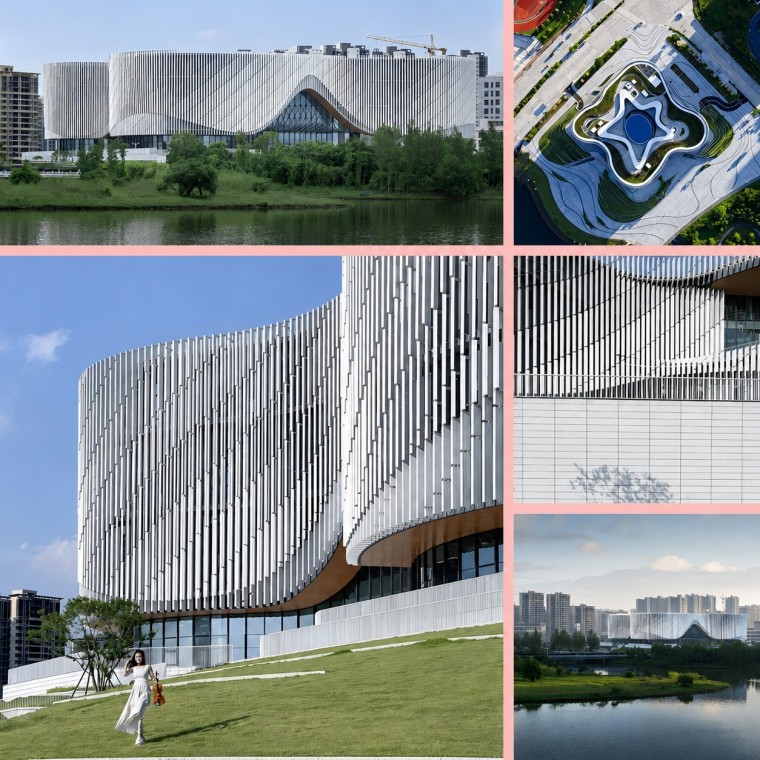



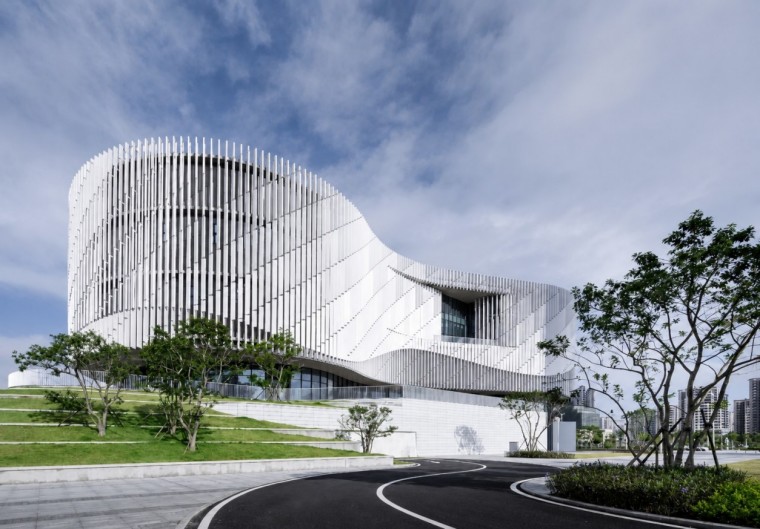
The building, located in Yangjiang, Guangdong Province, brings together several cultural and civic functions in one complex. Yet what many visitors remember first is not the list of functions, but the facade. The exterior is wrapped with vertical white ceramic elements that follow the curved form of the building. From far away, the building appears as a smooth white cultural landmark. From close up, the individual terracotta fins become visible, and the facade begins to reveal its rhythm, depth and material character.
This is the real strength of the project. It does not rely on one dramatic gesture only. Instead, it creates a layered visual experience. The building is calm from a distance, rich in detail at close range and completely different at night. For architects and facade designers, Yangjiang Cultural Center shows why terracotta can still feel fresh in contemporary public architecture.
The First Impression: A Soft White Form in the City
Many civic buildings try to express importance through height, mass or heavy stone-like surfaces. Yangjiang Cultural Center takes another path. Its white facade gives the building a light and open appearance, while the rounded outline softens the scale of the complex. The building does not look like a sealed institution. It feels more like a public destination shaped by landscape, movement and light.
The white glazed terracotta fins are central to this impression. They create a continuous outer skin that visually unifies the different parts of the building. At the same time, the gaps between the fins prevent the facade from becoming flat or lifeless. The screen has depth. It catches sunlight. It creates shadows. It lets the building breathe visually.
This kind of facade is especially suitable for a cultural center. Cultural architecture needs dignity, but it also needs accessibility. A building that is too solid may feel distant. A building that is too transparent may lack identity. The terracotta fin facade gives Yangjiang Cultural Center a strong civic image while keeping the exterior light, porous and welcoming.
Light as a Building Material
The most interesting part of the facade is how it works with light. During the day, the white glazed surface reflects sunlight and makes the building stand out against the sky and surrounding greenery. But the facade is not a blank white wall. Because the terracotta fins are arranged vertically, light is broken into strips, lines and shadows. The surface becomes active.
As the sun moves, the shadow pattern changes. On some parts of the facade, the fins appear almost dense and solid. On other parts, the openings become more visible, allowing glimpses of the glass and interior spaces behind. This changing effect gives the building a sense of movement, even though the ceramic components remain fixed.
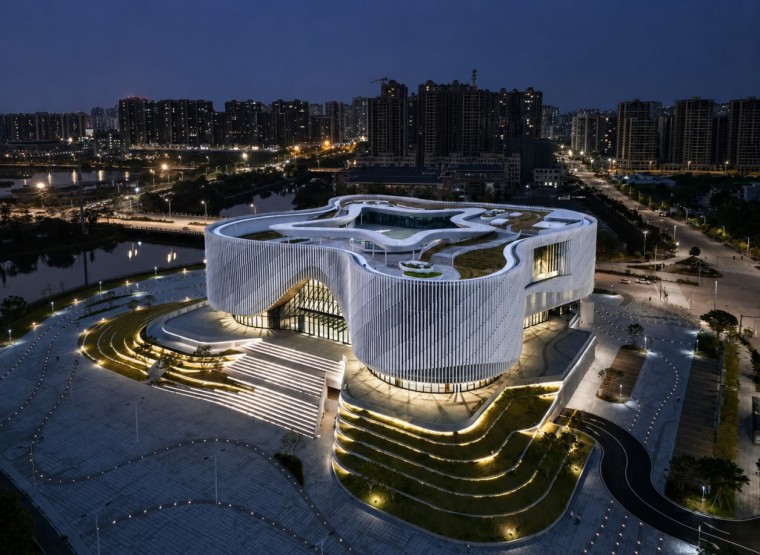
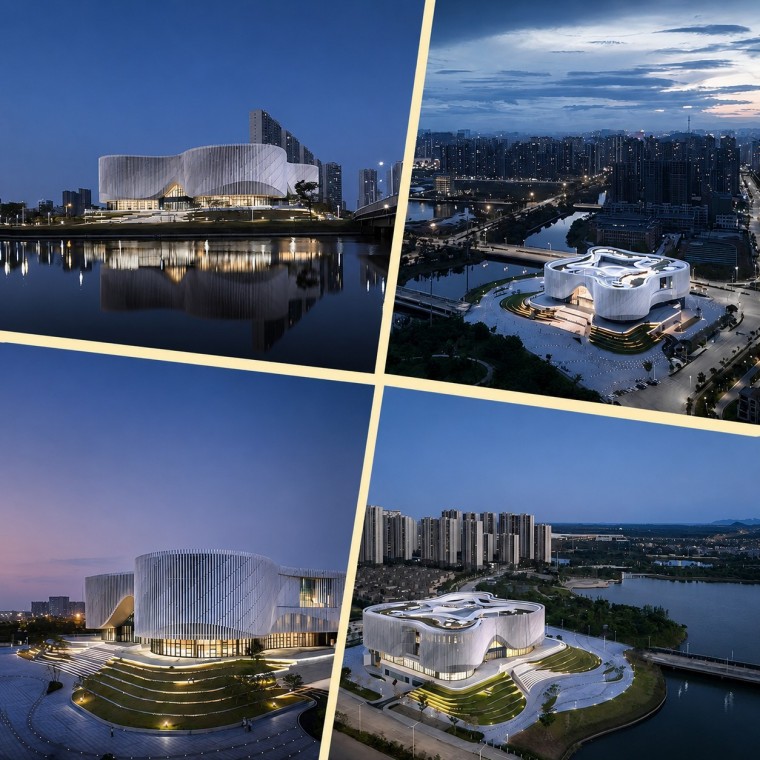
At night, the experience changes again. The white ceramic surface catches artificial lighting from the landscape, entrance and interior spaces. Instead of disappearing into darkness, the facade becomes a soft luminous layer. The building reads as a public landmark, but not in an aggressive way. It glows quietly beside the city and water.
Why Glazed Terracotta Feels Different from Painted Metal
White exterior screens can be made from many materials, including aluminum, steel and fiber cement. But glazed terracotta has a different visual weight. It is ceramic, not a thin coated sheet. The fired clay body gives the component substance, while the glazed surface gives it brightness and color stability. This combination is one reason the Yangjiang facade feels refined rather than purely industrial.
Painted metal louvers can be very precise and efficient, but they often have a technical appearance. White glazed terracotta, by contrast, has a softer material depth. The surface reflects light, yet it does not feel mirror-like. The edges, thickness and ceramic texture create a more architectural expression. For cultural buildings, this difference matters because the facade is part of the visitor’s emotional experience.
Terracotta also carries a long material history, even when used in a very modern form. In Yangjiang Cultural Center, the material is not used as traditional brick or tile. It is extruded and glazed into contemporary vertical fins. This makes the project interesting: the material remains ceramic, but the language is fully modern.
A Facade That Follows Movement
The curved plan of Yangjiang Cultural Center gives the building its flowing outline, but the terracotta fins make that movement visible. If the same building were covered with a flat panel system, the curves would still exist, but the surface would be much quieter. With vertical fins, the curve becomes readable through repeated lines. The facade seems to stretch, turn and rise as people move around it.
This is one reason the building is often associated with waves, sails and coastal light. The design does not copy these images directly. Instead, it uses rhythm and curvature to suggest them. The vertical fins act almost like a musical score across the building envelope: each piece is simple, but together they create a larger movement.
For public architecture, this is a useful design approach. It avoids excessive decoration while still giving the building a strong identity. The facade has enough complexity to be memorable, but the overall material language remains clean and disciplined.
From Image to System
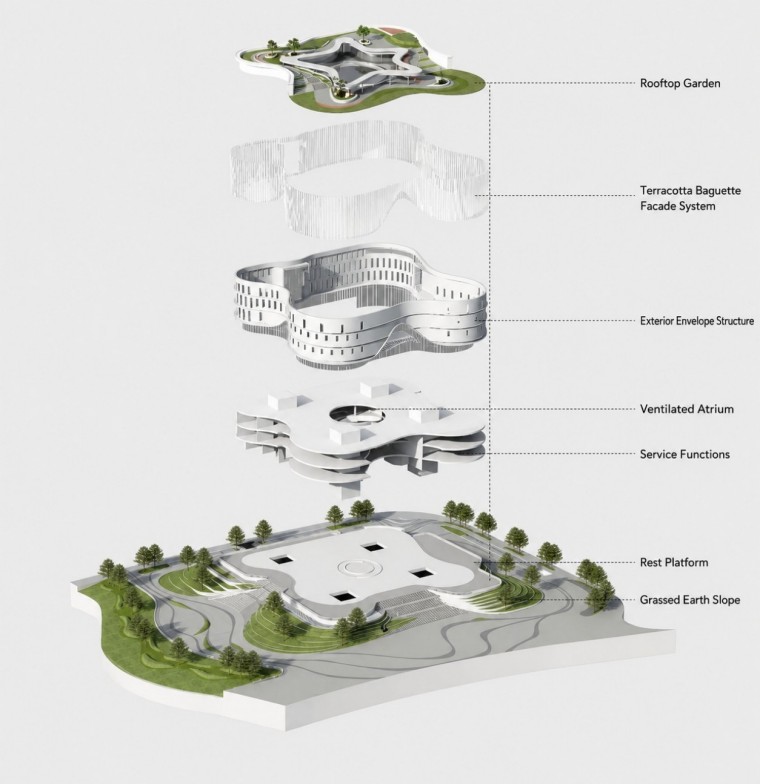
A facade like this may look effortless in photographs, but it depends on careful system design. The vertical ceramic fins must be supported, aligned and fixed in a way that can handle exterior conditions. Their spacing has to match the visual intention while also considering sunshade performance, wind load, installation sequence and future maintenance. The curved building form makes this coordination even more important.
Published project information describes the Yangjiang facade as using white glazed terracotta elements in a vertical screen system. The ceramic components are supported by a metal structure, allowing the facade to form a continuous outer layer around the building. This kind of system requires close coordination between architects, facade consultants, manufacturers and installers.
For manufacturers, the challenge is not only to produce a beautiful sample. The real challenge is consistency. A large public building needs many ceramic pieces with stable color, controlled size, reliable strength and suitable packaging for site installation. If the glaze varies too much, the white facade loses its unity. If the pieces are not straight enough, the vertical rhythm becomes uneven. If the fixing details are not properly coordinated, the intended lightness of the facade may be lost.
Where Terracotta Facade Panels and Fins Meet
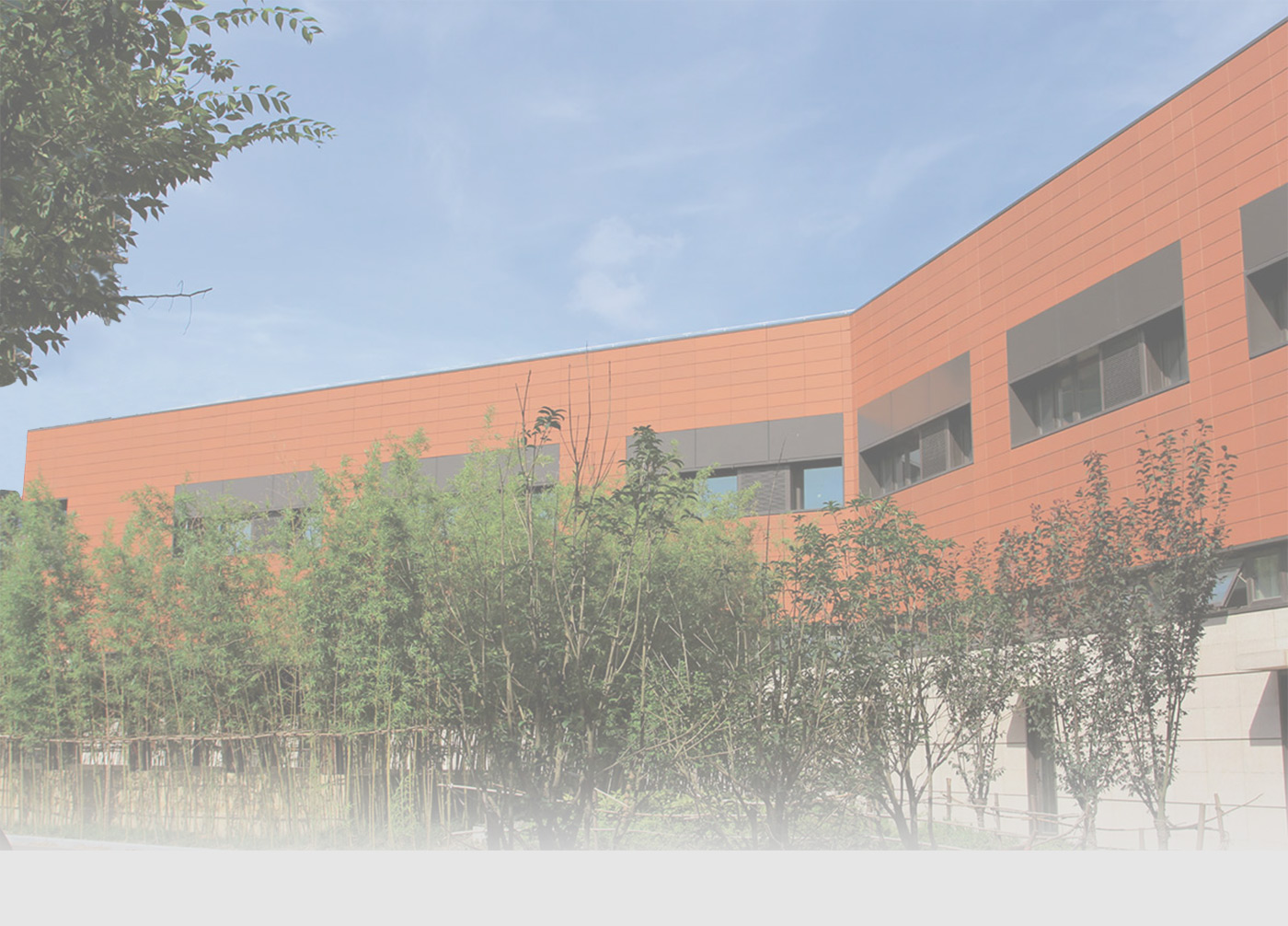
Although the Yangjiang project is known for its vertical ceramic fins, it also helps explain the broader value of architectural terracotta. Different building parts may need different terracotta solutions. Some facades need open screens and shading. Others need solid wall protection, flat rainscreen cladding or a more traditional ceramic tile expression.
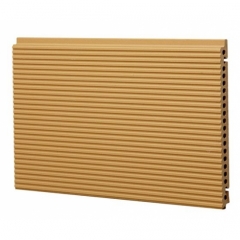
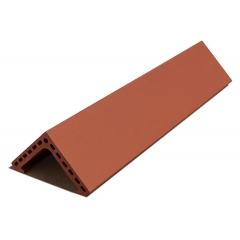
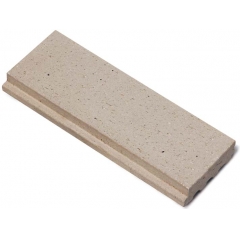
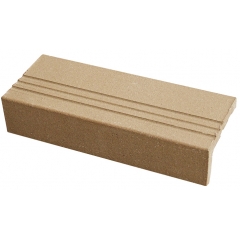
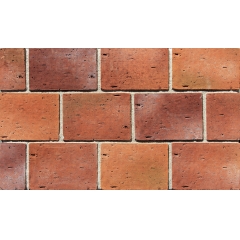
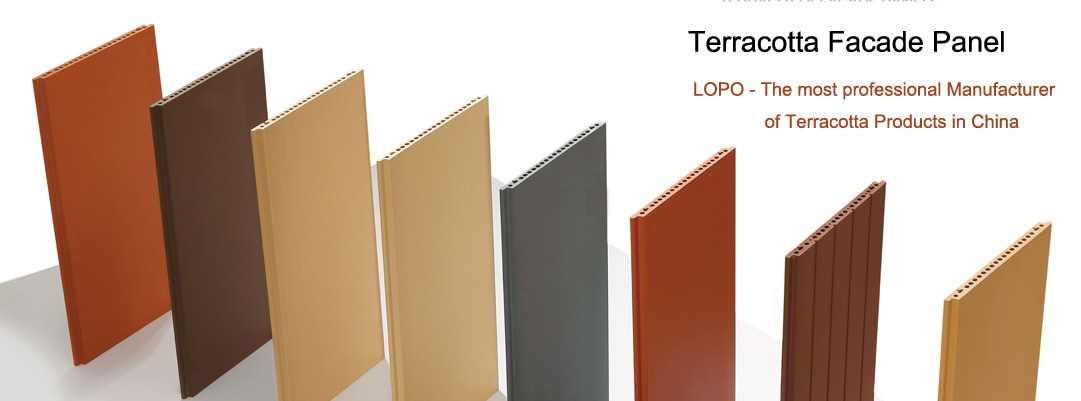
For a project that needs a clean and durable exterior wall surface, Terracotta Facade Panels can provide a strong rainscreen solution. For facades that need rhythm, shading and a more transparent outer layer, Terracotta Baguette systems can be used as vertical or horizontal fins. For smaller-scale wall surfaces, Terracotta Tile may offer a thinner ceramic finish, while Terracotta Brick can create a more tactile and masonry-inspired character.
The point is not that one product is better for every project. The point is that terracotta can be adapted. It can be flat or three-dimensional, open or solid, traditional or contemporary. Yangjiang Cultural Center shows the most expressive side of this material family, where ceramic pieces become a moving outer skin rather than a simple wall covering.
The Role of White in Public Architecture
White buildings can be beautiful, but they are not easy. A weak white facade may look cheap, dirty or flat. A successful white facade needs depth, shadow and good material quality. Yangjiang Cultural Center works because its white surface is not plain. The vertical terracotta fins add texture and shading. The curved geometry gives the surface movement. The glazed ceramic finish gives the color brightness and stability.
White also gives the cultural center a sense of openness. It reflects the sky, contrasts with the green landscape and becomes especially clear against the evening city lights. In a coastal urban setting, this brightness helps the building feel connected to air and water. It feels civic, not private; open, not defensive.
For designers considering a white facade, this project offers a practical lesson: avoid making white too flat. Use depth, joints, rhythm and material texture to let light do some of the work. A white facade should change with the day. Otherwise, it quickly becomes dull.
A Human-Scale Detail on a Landmark Building
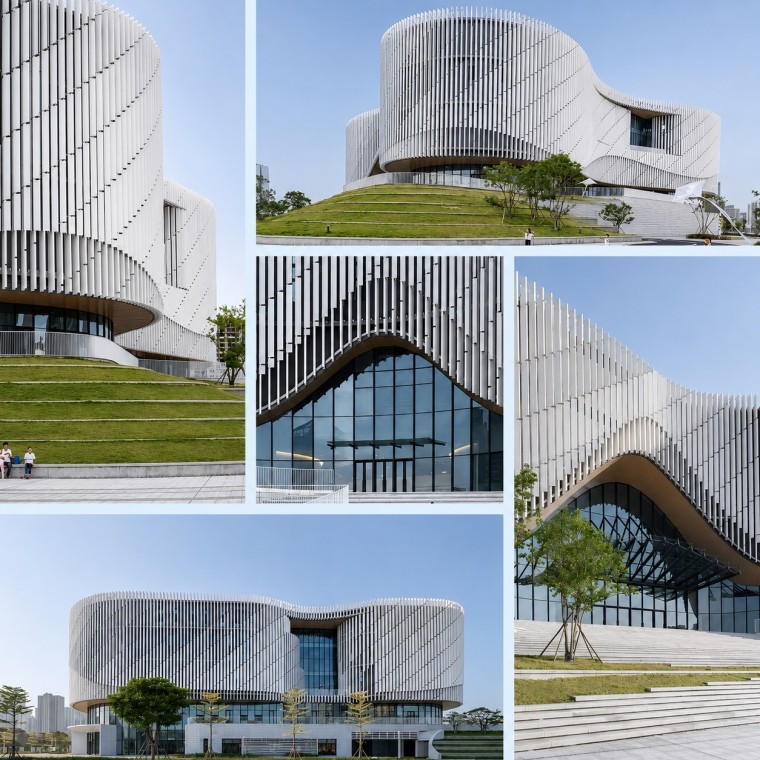
Large cultural buildings can easily feel distant. Yangjiang Cultural Center avoids this by combining a strong overall form with small repeated ceramic elements. The individual fins give the facade a human-scale reading. Visitors can stand near the entrance and see the thickness, spacing and shadow of the ceramic pieces. They can understand that the large white surface is made of many carefully arranged parts.
This matters because public buildings are not experienced only in aerial photos. They are experienced while walking, waiting, entering, resting and looking back from the landscape. A good facade should reward both distant viewing and close observation. The terracotta fins do that. They give the building a clear image from far away and a rich texture up close.
The entrance area is a good example. The curved white facade frames the glazed opening, while the fins continue around the building like a flowing curtain. The result is dramatic but still welcoming. The facade announces the entrance without using heavy signage or oversized decoration.
Durability Behind the Visual Effect
Public cultural buildings need materials that can handle time. A facade may look impressive at completion, but it also has to remain stable after years of sunlight, rain, humidity and cleaning. Terracotta has long been valued for exterior architecture because it is fired at high temperature and offers good weather resistance. When produced and installed properly, it can provide a durable ceramic skin for demanding public projects.
Glazed terracotta adds another layer of visual control. The color is not simply painted onto a metal sheet. It is part of a ceramic finish created through firing. This helps maintain a refined appearance and reduces concerns about fading or peeling. Of course, long-term performance still depends on proper detailing, including joints, drainage, support design and cleaning access.
In Yangjiang Cultural Center, the beauty of the facade is closely connected to this material reliability. The building’s visual identity depends on the white ceramic surface staying clear, consistent and dignified over time.
What This Project Means for Contemporary Terracotta Design
Yangjiang Cultural Center is part of a wider shift in architectural ceramics. Terracotta is no longer used only for red clay walls, traditional roof tiles or simple flat panels. With modern extrusion, glazing and fixing systems, it can support complex facade concepts, including sunshade screens, curved envelopes, cultural landmarks and parametric design.
This does not mean every project should become complex. Many good buildings use terracotta in a quiet and simple way. But the Yangjiang project expands the imagination of what ceramic facade materials can do. It shows that terracotta can be part of a light, white, contemporary and highly expressive building.
For LOPO Terracotta and related architectural terracotta suppliers, projects like this demonstrate the importance of customization. Architects often need more than standard products. They need samples, adjusted profiles, special colors, system advice and project-based production support. A landmark facade is rarely created by catalog selection alone.
Useful Design Takeaways
The first takeaway is to treat facade depth as a design tool. A flat surface can be elegant, but a layered surface can create richer light and shadow. The second takeaway is to use material rhythm to reduce the scale of large public buildings. Repeated ceramic fins can make a big facade feel more approachable. The third takeaway is to consider color and light together. White works best when it has texture and depth. The fourth takeaway is to think of terracotta as both material and system. The visible ceramic piece is only one part of the whole facade solution.
For architects working on museums, cultural centers, libraries, civic halls, schools or waterfront buildings, these lessons are practical. A terracotta facade does not have to imitate the past. It can be a contemporary envelope that responds to climate, expresses identity and gives people a memorable spatial experience.
Further Reading and Product Reference
Readers interested in the project background may refer to public architectural introductions such as ArchDaily, local news from Yangjiang Government and related project coverage from The Paper. For material exploration, visitors can also browse Terracotta Panel products and related architectural ceramic facade solutions.
Yangjiang Cultural Center is memorable because its facade is both quiet and active. The white glazed terracotta fins stand in order, yet the building seems to move. The material is solid, yet the image feels light. The facade shades the building, yet it also makes the building brighter. That balance is what makes the project a meaningful reference for contemporary ceramic facade design.