
How Curved Brickwork Gives a Retail District Its Identity At Yiwu Place, arches are more than a historical reference. They mark entrances, deepen faca...
MoreLOPO Material and Culture Huandong Yunqi does not rebuild a traditional courtyard house. It remembers one through color, material contrast and the mea...
MoreA modern headquarters building is no longer judged only by its height or its interior quality. The building envelope has become one of the most import...
MoreShanghai has many memorable cultural buildings, but Theatre YOUNG in Yangpu District has a special character. It is not only a renewed theater building. It is also a good example of how material, light, and architectural rhythm can work together to create a more emotional public space.
Formerly known as Yangpu Grand Theatre, the building completed its renovation and transformed into Theatre YOUNG, according to the official project introduction. For the local community, this was more than a simple architectural update. The theater carries old memories, while its new image gives the district a fresh cultural landmark.
Among the most noticeable design features of Theatre YOUNG is the use of vertical terracotta elements across the facade and interior spaces. These elements can be described as terracotta sunscreens, terracotta baguettes, clay louvers, or architectural terracotta profiles. In this article, the term “terracotta sunscreens” is used because it highlights their role in filtering light, creating depth, and shaping the building’s atmosphere.
A theater is usually experienced in stages. First, people see it from the street or public plaza. Then they approach the entrance, pass through the foyer, move along stairs and corridors, and finally enter the auditorium. Good theater architecture understands this sequence. It does not only design a performance hall; it designs the full journey before and after the performance.
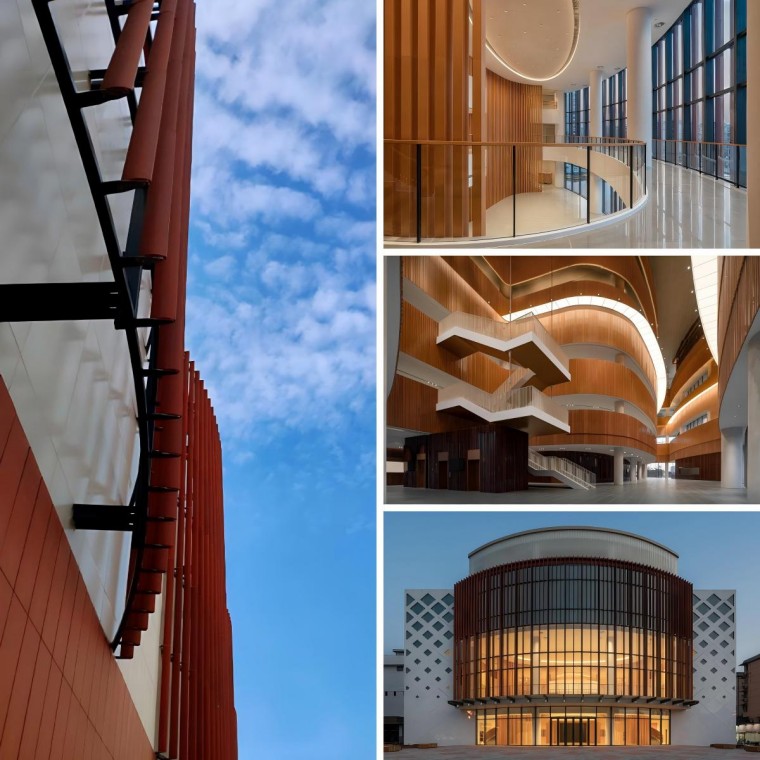
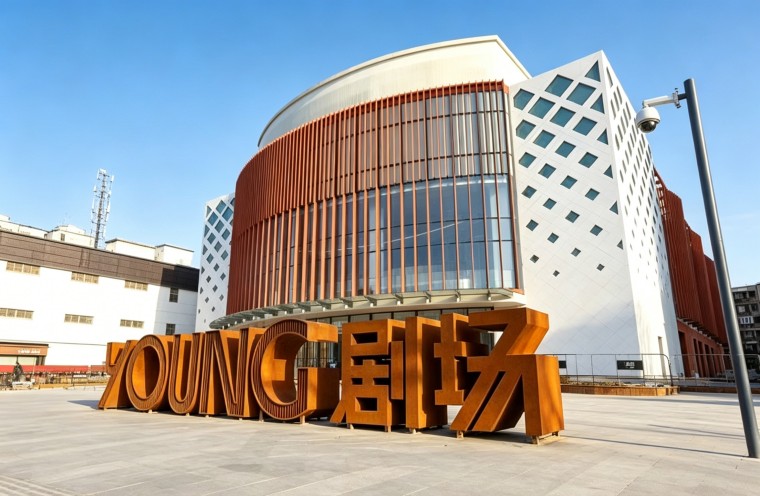
Theatre YOUNG does this with a clear and warm architectural language. The exterior combines white building volumes, glass curtain walls, and reddish-brown terracotta sunscreens. The curved facade faces the open plaza, creating a strong public presence. The terracotta lines in front of the glass soften the scale of the building and make the theater feel more approachable.
This is important in urban cultural architecture. A theater should not feel like a closed box. It needs to show that it belongs to the city. The glass areas allow light and visual connection, while the terracotta sunscreens provide rhythm, texture, and a sense of privacy. Together, they create a facade that is open but not empty, modern but not cold.
In many building projects, sunscreen elements are treated only as technical components. They are added to reduce glare, shade the facade, or control solar exposure. At Theatre YOUNG, the terracotta sunscreens do more than that. They become part of the theater’s architectural expression.
The vertical ceramic elements create a second skin in front of the glass. This layer gives the facade depth. When sunlight hits the building, the terracotta profiles cast shadows on the glass and surrounding surfaces. When viewed from different angles, the facade changes. Sometimes the glass feels more visible. Sometimes the ceramic lines become dominant. This changing visual effect gives the building a quiet sense of movement.
For theater architecture, this kind of layered facade is very suitable. A theater is connected with performance, curtain, light, and shadow. The terracotta sunscreen system naturally echoes these ideas. It behaves almost like a permanent architectural curtain, filtering the view between the city and the cultural life inside.
Modern theater buildings often use glass, steel, aluminum, stone, and painted surfaces. These materials can create clean lines and efficient construction, but they may also feel hard or distant if used without balance. Terracotta brings a different feeling.
Fired clay has a natural warmth. Its color is not just a coating on the surface; it comes from the ceramic body and firing process. This gives terracotta sunscreens a more solid and lasting visual quality. At Theatre YOUNG, the reddish tone creates a strong contrast with the white exterior walls and bright interior spaces. The result feels lively, cultural, and human.
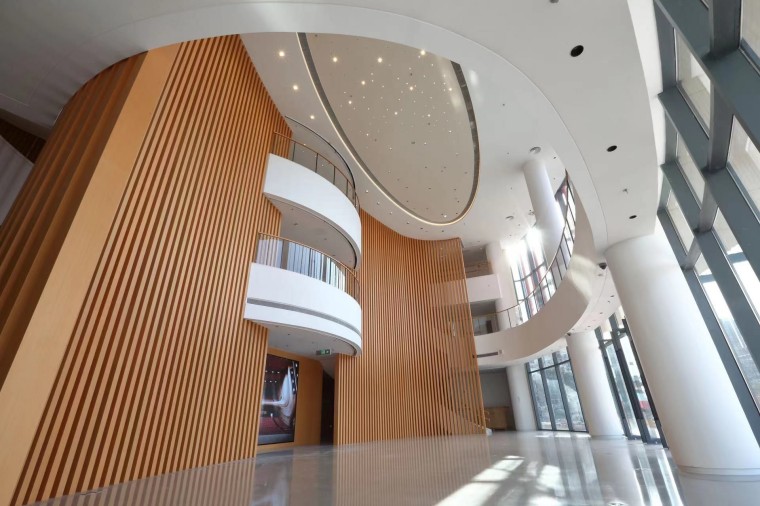
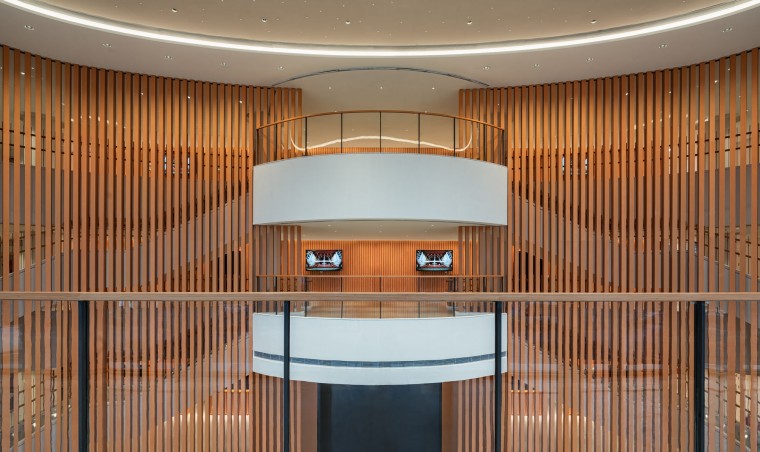
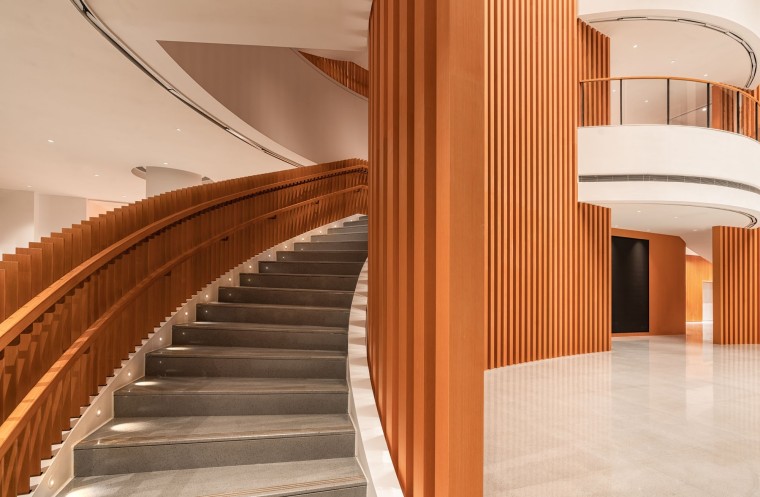
Inside the building, the same warm ceramic language continues. Tall walls, stair areas, balcony zones, and public halls use vertical clay elements to create a unified atmosphere. The material helps the large interior spaces feel less empty. It adds detail to high walls and gives visitors something tactile and memorable to experience.
One reason Theatre YOUNG is worth studying is that the design does not rely on excessive decoration. The terracotta sunscreens are simple in form. They are repeated vertical elements. But because they are used with the right scale, spacing, color, and lighting, they create a strong effect.
This is a useful lesson for theater facade design. A cultural building does not always need complicated shapes to look impressive. Sometimes, depth is more powerful than decoration. A layered facade can create richness without visual noise. Terracotta sunscreens help achieve this because they stand away from the main surface and produce real shadows.
On the exterior, this depth makes the curved glass facade more architectural. In the interior, the repeated ceramic lines make large walls feel organized and elegant. The same material creates both visual order and emotional warmth.
The transformation from Yangpu Grand Theatre to Theatre YOUNG is also a story about urban renewal. Many cities face the same question: how can older public buildings be updated without losing their memory? Complete demolition is not always the best answer. A good renovation can keep the cultural role of a building while giving it a new identity.
Theatre YOUNG shows one possible direction. The project uses a contemporary architectural language, but it does not feel disconnected from the past. The clay material has a sense of history. The clean vertical sunscreen form feels modern. This balance makes the theater suitable for a new generation of audiences while still carrying the memory of Yangpu Grand Theatre.
For Shanghai, a city where old neighborhoods and new developments often stand close together, this kind of architectural renewal is meaningful. Theatre YOUNG is not only a performance venue. It is part of the district’s changing cultural landscape.
The interior images of Theatre YOUNG show how strongly the terracotta language shapes the visitor experience. In the lobby, vertical terracotta sunscreens and clay profiles rise along tall walls. Around the staircases, the repeated lines follow movement and guide the eye upward. Beside white balconies and curved ceilings, the warm ceramic surfaces create balance.
This continuity matters. If the facade used terracotta but the interior completely changed material direction, the building might feel divided. Instead, Theatre YOUNG allows the exterior and interior to speak the same design language. Visitors see the terracotta rhythm from outside, then experience it again once they enter the building.
For public cultural buildings, this kind of material consistency can make the architecture more memorable. People may not remember every detail, but they will remember the warm vertical lines, the bright public hall, and the feeling of moving through a space designed for culture and gathering.
Theatre YOUNG offers several useful ideas for architects, facade consultants, developers, and contractors working on theater architecture in Shanghai or other cities.
First, terracotta sunscreens can help a building create a strong public image without becoming too heavy. The vertical lines are visually clear, but the open spacing keeps the facade light.
Second, ceramic sunscreen elements work well with glass. They reduce the flatness of curtain walls and add depth through shadow. This is especially useful for theaters and cultural centers, where the facade should feel expressive and welcoming.
Third, terracotta can connect exterior and interior design. The same material can appear on the facade, in the lobby, along staircases, and around public circulation areas. This gives the project a stronger overall identity.
Finally, the material choice should match the building’s cultural purpose. Terracotta is natural, durable, and warm. For a theater, these qualities support the emotional nature of the building.
This article discusses Theatre YOUNG as an industry case study and architectural design reference. The terracotta sunscreens used in this project were not supplied by LOPO Terracotta. However, the project shows how this type of architectural terracotta product can bring real value to theater architecture, cultural buildings, and public facade design.
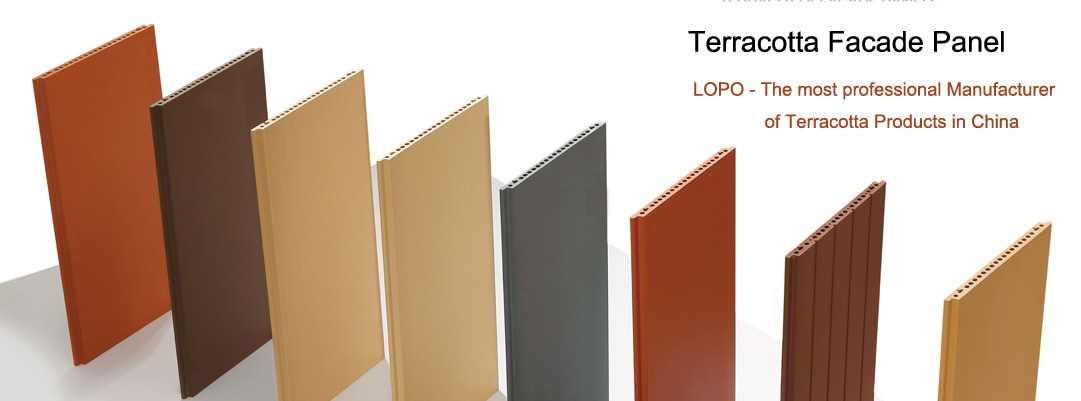
LOPO Terracotta Panel is a professional manufacturer in China for architectural terracotta products. Its product range includes terracotta panels, terracotta baguettes, terracotta sunscreens, terracotta louvers, clay bricks, and customized ceramic profiles for exterior and interior wall applications.
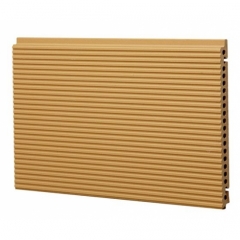
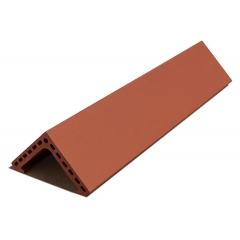
For projects that require vertical ceramic sunscreen elements similar to those seen in Theatre YOUNG, LOPO Terracotta can provide different section sizes, colors, surface textures, lengths, and fixing system options. More information can be found on the Terracotta Baguette product page.
In theater projects, terracotta sunscreen products can be used for facade shading, visual screening, decorative wall design, balcony edges, entrance features, and interior public spaces. The final solution should always be developed according to project drawings, local climate, installation requirements, and architectural design intent.
Theatre YOUNG is a strong example of theater architecture in Shanghai because it shows how renovation can create a fresh cultural identity. The terracotta sunscreens are not only facade accessories. They shape the way the building receives light, creates shadow, and presents itself to the city.
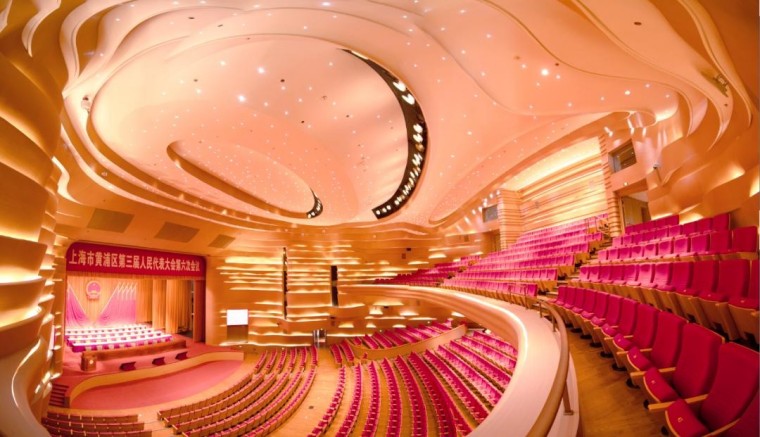
On the exterior, the vertical ceramic elements add depth to the glass facade. Inside, they bring warmth and rhythm to the public spaces. From the plaza to the lobby, from the staircase to the auditorium, the building uses material continuity to create a complete cultural experience.
For future theater architecture, terracotta sunscreens remain a meaningful design option. They combine the natural beauty of fired clay with the precision of modern ceramic manufacturing. More importantly, they help a public building feel warm, layered, and memorable.
Tags: Theatre YOUNG, terracotta sunscreens, Yangpu Grand Theatre, theater facade design, terracotta baguettes